Saints are celebrated across the globe. Some saints, like St. Patrick or St. Anthony, may be better known than others. St. George’s Day might not be as widely celebrated as St. Patrick’s Day, but it’s a meaningful holiday nonetheless.
Canadians living in Newfoundland and Labrador celebrate the provincial holiday of St. George’s Day each year on the Monday closest to April 23. This holiday commemorates the death of Saint George in 303 AD. Saint George was a cavalryman in the Roman army at Lydda (modern-day Israel). St. George was a Christian at a time when Rome was ruled by the anti-Christian emperor Diocletian. Since he refused to make sacrifices to Roman gods, St. George was tortured over several years and eventually was beheaded. A monastery was built in his honor and dedicated in Jerusalem in the fifth century.
St. George’s Day is celebrated outside Canada as well. England, Bulgaria, Portugal, Georgia, and parts of Spain also take part in the celebrations, as St. George is the patron saint of many of these nations, notably England, according to Canada International Student Magazine. St. George also is the patron saint of soldiers and the Boy Scouts organization. He is revered for his bravery and faith. Here are some other notable facts about St. George, courtesy of English Heritage.
Although St. George is the patron saint of England, among other nations and cities, he was not British and likely spoke Greek.
Because he was martyred, George is still commemorated by Christians as St. George the Martyr.
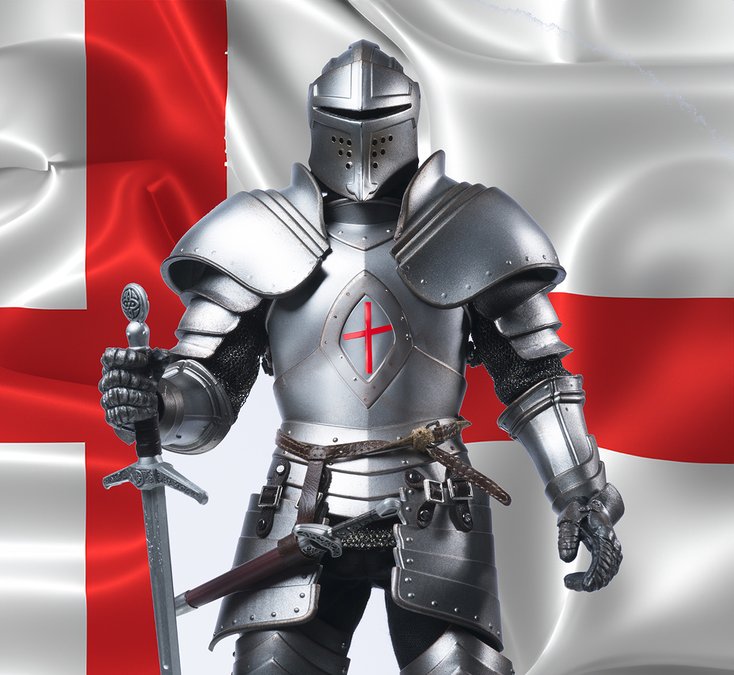
St. George became popular with English kings, and Edward I had banners bearing the emblem of St. George (a red cross on a white background). That cross became part of England’s national flag in the early sixteenth century.
St. George supposedly rode into the city of Silene and freed it from a man-eating dragon. Images of George and the dragon persist. There was no dragon, and the stories likely symbolize the conflict between good and evil.